You'll see "HEPA" printed on everything from air purifiers to vacuum cleaners, but the term gets used loosely enough that it's worth knowing what it actually means — and how to tell a genuine HEPA filter from a marketing label borrowing the name.
What HEPA actually stands for
HEPA stands for High Efficiency Particulate Air (filter). It isn't a brand or a material — it's a performance standard. A filter can only be called "True HEPA" if it meets a specific, independently defined efficiency threshold, tested at the hardest particle size to catch.
How a HEPA filter actually works
A HEPA filter isn't a screen with tiny uniform holes the way people often picture it. It's a dense, randomly arranged mat of fine fibres — usually fibreglass — and air is forced through that mat via three separate physical mechanisms working together:
- Interception — mid-sized particles follow the airflow around a fibre but pass close enough to brush against it and stick.
- Impaction — larger, heavier particles can't change direction fast enough to follow the airflow around a fibre, so they slam directly into it.
- Diffusion — the smallest particles move erratically (Brownian motion) rather than following the airflow in a straight line, which paradoxically makes them more likely to collide with a fibre and get trapped.
Counter-intuitively, the hardest particles to catch aren't the smallest ones — they're the mid-sized ones, typically around 0.3 microns, sitting in the gap between where interception/impaction work well and where diffusion takes over. This size is called the Most Penetrating Particle Size (MPPS), and it's the specific size HEPA filters are tested and rated against.
The grading system: H13, H14, and what the numbers mean
HEPA efficiency is defined by the European EN 1822 standard, which rates filters in classes:
| Class | Efficiency at MPPS (~0.3 microns) | Typical use |
|---|---|---|
| E10–E12 (EPA, not HEPA) | Below 99.95% | Basic residential filters, pre-filters |
| H13 | ≥99.95% | Quality home air purifiers — the standard for consumer use |
| H14 | ≥99.995% | Medical-grade — operating theatres, cleanrooms, labs |
| U15+ (ULPA) | ≥99.9995% | Ultra-clean industrial and semiconductor manufacturing |
The gap between H13 and H14 looks small on paper, but it isn't: H14 lets through roughly six times fewer particles than H13 for the same volume of air. That said, H13 is genuinely the right choice for almost every home — the jump to H14 mainly matters in medical or cleanroom settings, and it comes at the cost of higher airflow resistance (meaning the purifier has to work harder to push air through it), without a meaningful practical benefit for ordinary household air.
"HEPA-type" and "HEPA-style" are not the same thing
This is the single most important thing to check before buying anything labelled HEPA. "HEPA-type," "HEPA-style," and "HEPA-like" are unregulated marketing terms — they carry no defined efficiency standard at all, and can sit meaningfully below the 99.95% threshold that a genuine H13 filter has to meet. If a listing doesn't explicitly state a class (H13, H14) or an efficiency figure at 0.3 microns, treat the "HEPA" label with some scepticism.
What a HEPA filter actually captures — and what it doesn't
At 99.95%+ efficiency, a True HEPA filter handles the airborne particles most households actually care about: dust, pollen, pet dander, mould spores, and bacteria (which range from roughly 0.5 to 5 microns, comfortably within HEPA's effective capture range). It also captures the fine particles that many viruses travel on when carried by respiratory droplets or aerosols.
One important distinction: a HEPA filter is a physical filter, not a disinfectant. It traps particles — including ones carrying bacteria or viruses — but it doesn't kill or deactivate anything itself. That's why many air purifiers pair a HEPA filter with a separate active step (UV light, ionisation, or an activated carbon layer) to handle odours, gases, and airborne pathogens directly, rather than relying on HEPA filtration alone for everything.
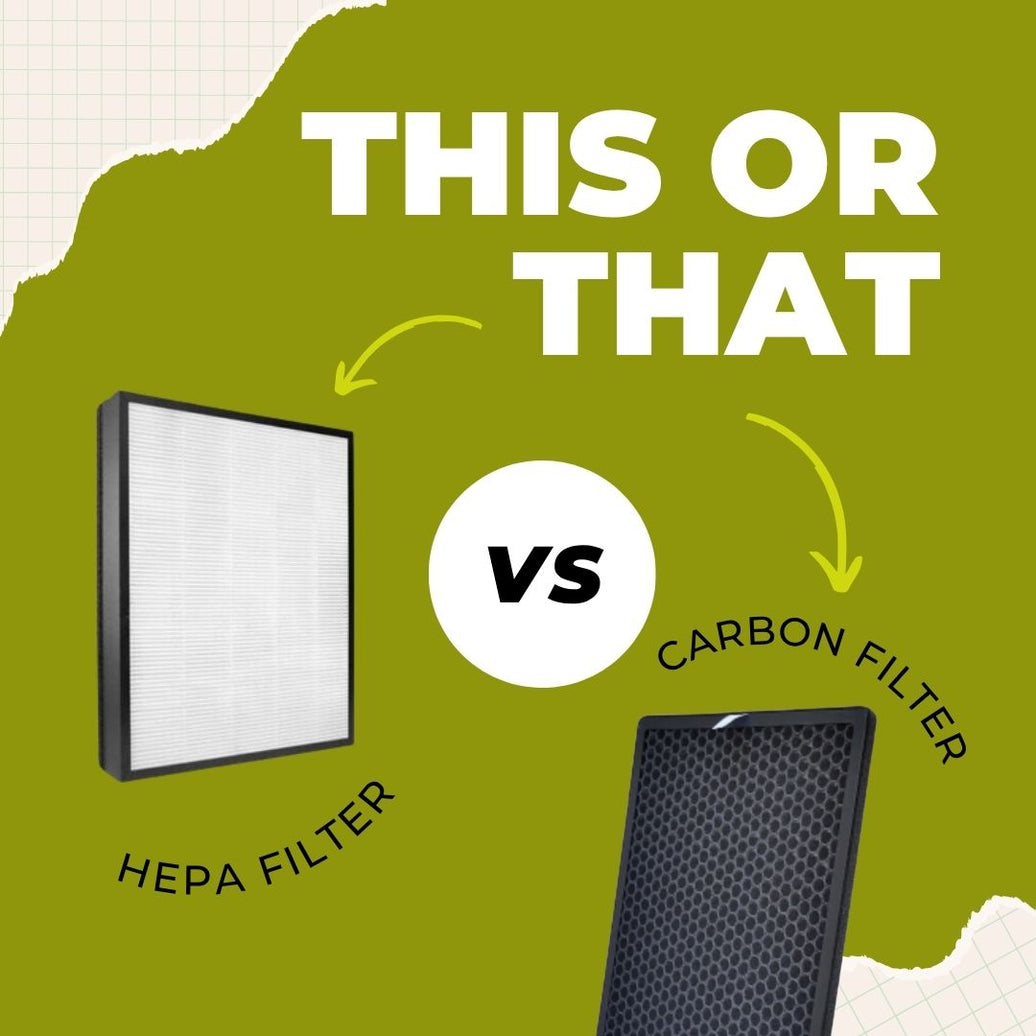
It's also worth knowing what HEPA doesn't do well on its own: it doesn't remove gases, smoke odour, or volatile organic compounds (VOCs) — that requires activated carbon, which is why most serious air purifiers combine both rather than relying on HEPA filtration alone.
Why filter fit matters as much as the filter itself
A brilliant H14 filter in a badly sealed housing performs worse than a properly sealed H13 — because if air can slip around the edges of the filter rather than through it (a problem called bypass), that unfiltered air rejoins the room carrying its particles with it, regardless of how good the filter media itself is. This is why the overall build of an air purifier — gasket quality, housing seal, airflow design — matters just as much as the filter grade printed on the box.
The bottom line
- Look for an explicit class (H13 or H14) or a stated efficiency at 0.3 microns — not just the word "HEPA" on its own.
- H13 is the right choice for virtually all home use — it's what quality consumer air purifiers are built around, and stepping up to H14 mainly adds cost and airflow resistance without a meaningful benefit outside medical settings.
- Avoid "HEPA-type" or "HEPA-style" labelling — these terms exist specifically because they don't have to meet the actual standard.
- Pair HEPA with active odour/gas control (activated carbon, UV, ionisation) if you want a purifier that handles more than just particulate matter.
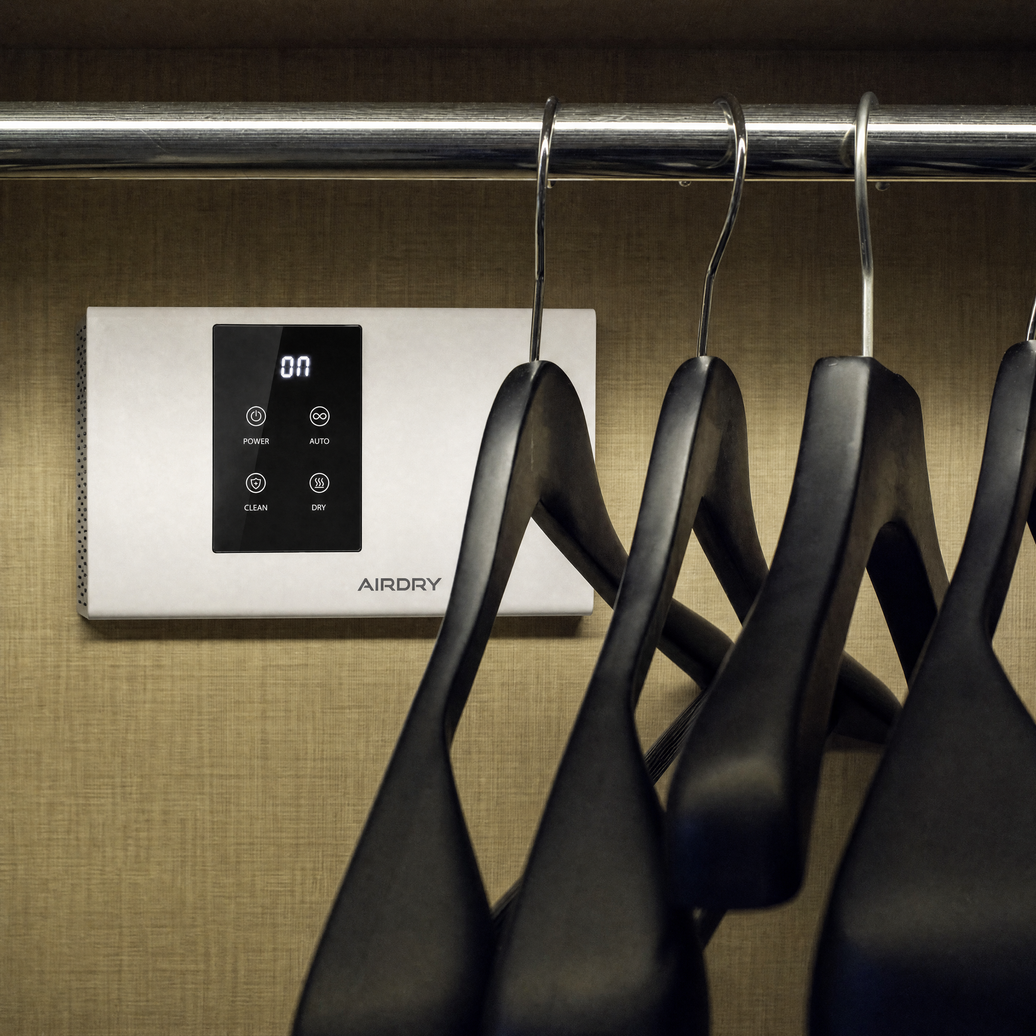
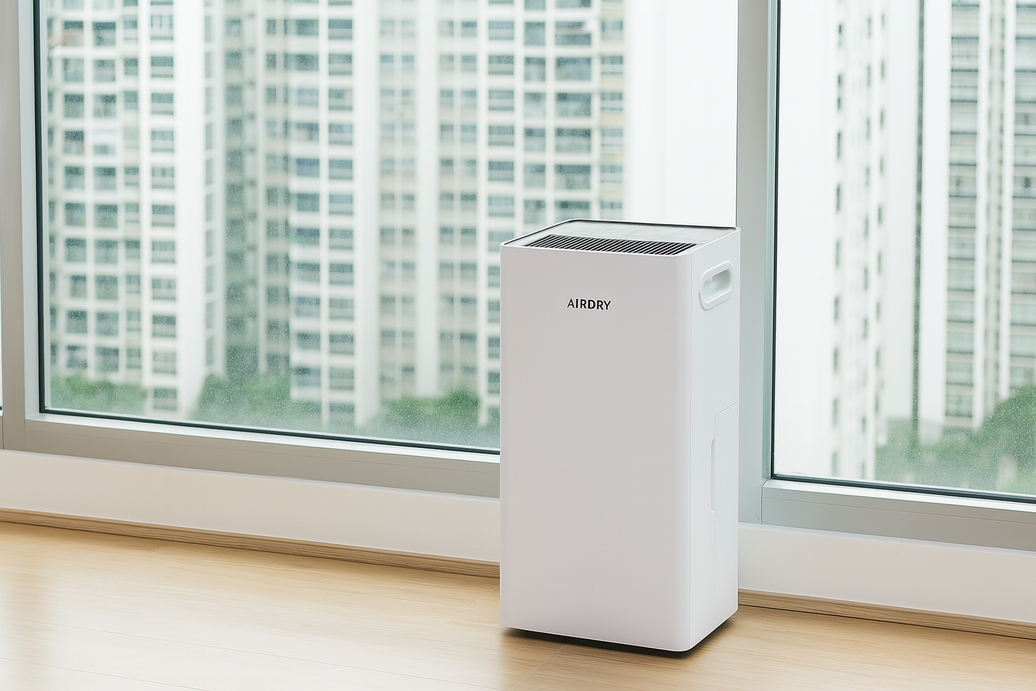
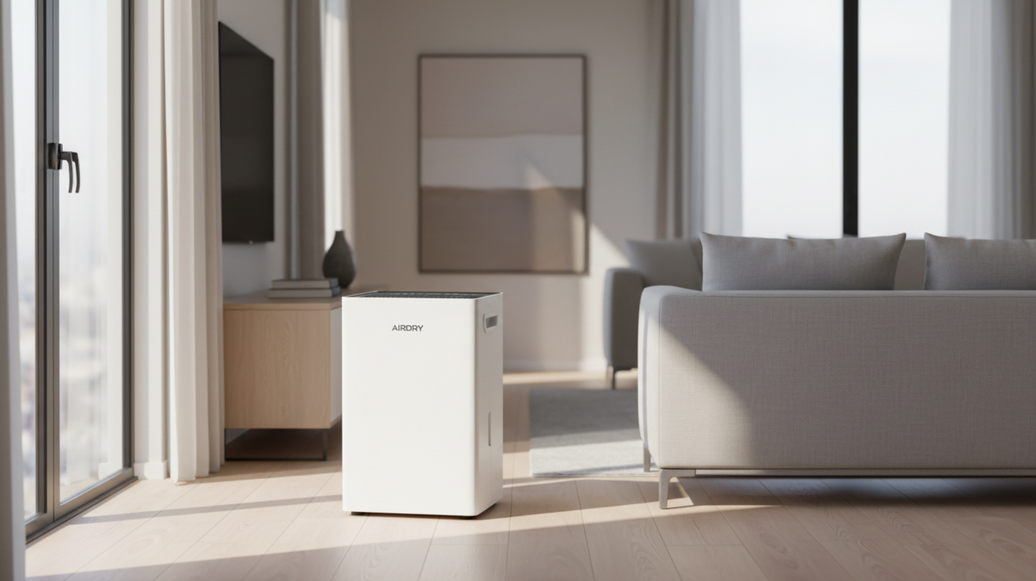
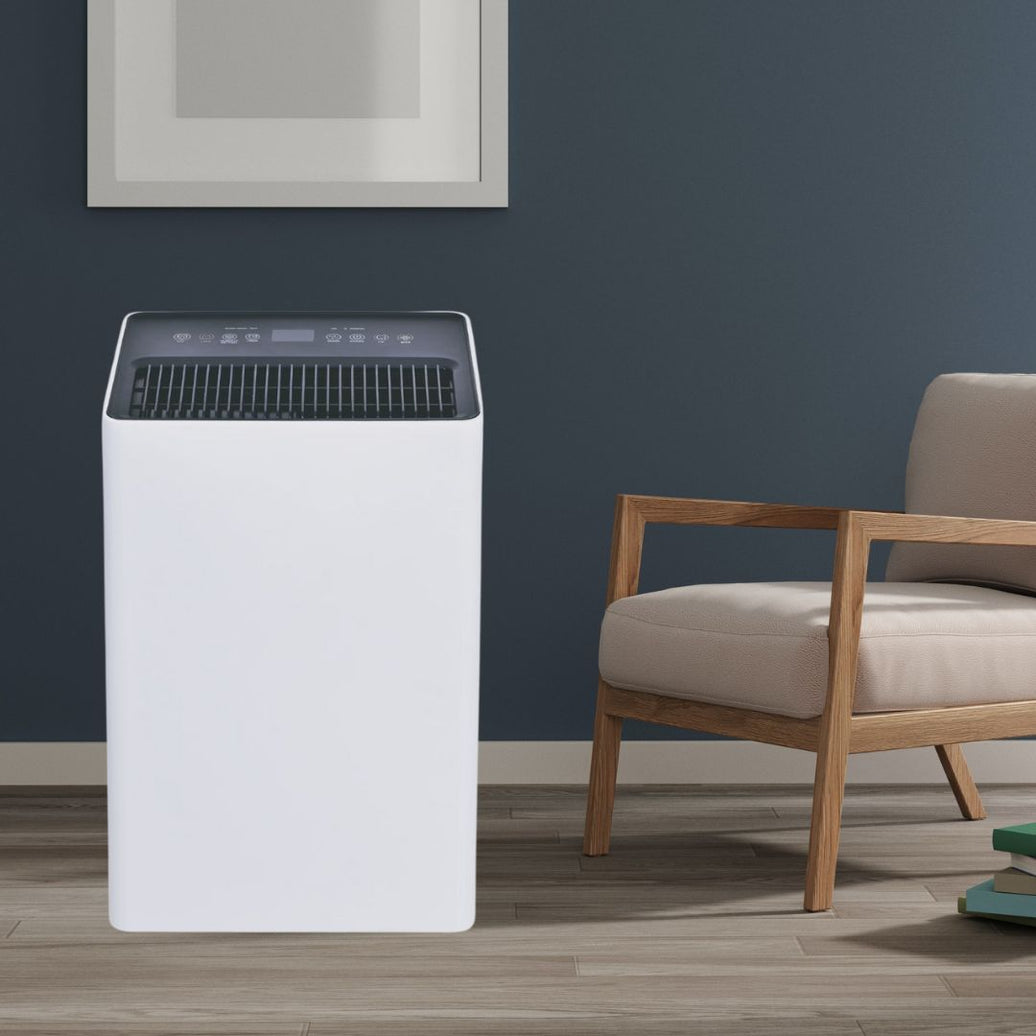
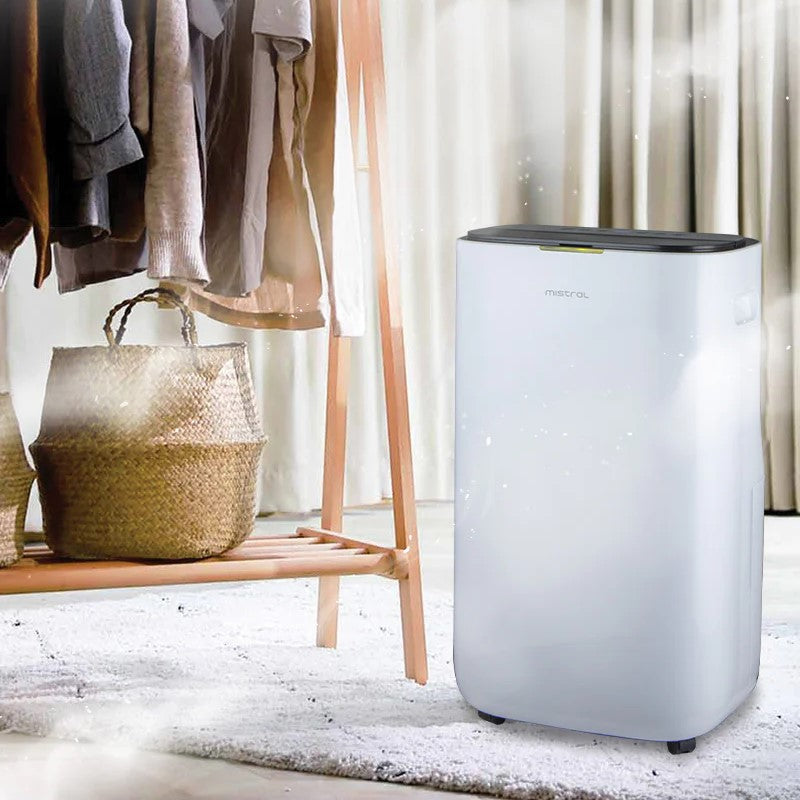
Our AIRDRY Smart Pro Room Air Purifier & Dehumidifier is built around a genuine medical-grade H13 HEPA filter, paired with a negative ioniser and UV light for the odour and airborne-pathogen side HEPA alone doesn't cover — removing up to 99.95% of airborne particles while also managing the humidity that HEPA filtration doesn't touch at all.