Getting your BTO keys is exciting — and then you start the appliance checklist, and "humidity control" shows up as its own confusing category. Dry box. Dry rod. Closet dehumidifier. Room dehumidifier. They all promise to deal with moisture, but they solve different problems, at different scales, for different things.
Buying the wrong one means either overspending on capability you don't need, or — more commonly — ending up with mouldy cabinets and musty wardrobes because you bought a solution sized for the wrong job.
Here's a clear breakdown of all four, what each one actually does, and how to figure out what your specific BTO needs.
Why This Matters More in a BTO
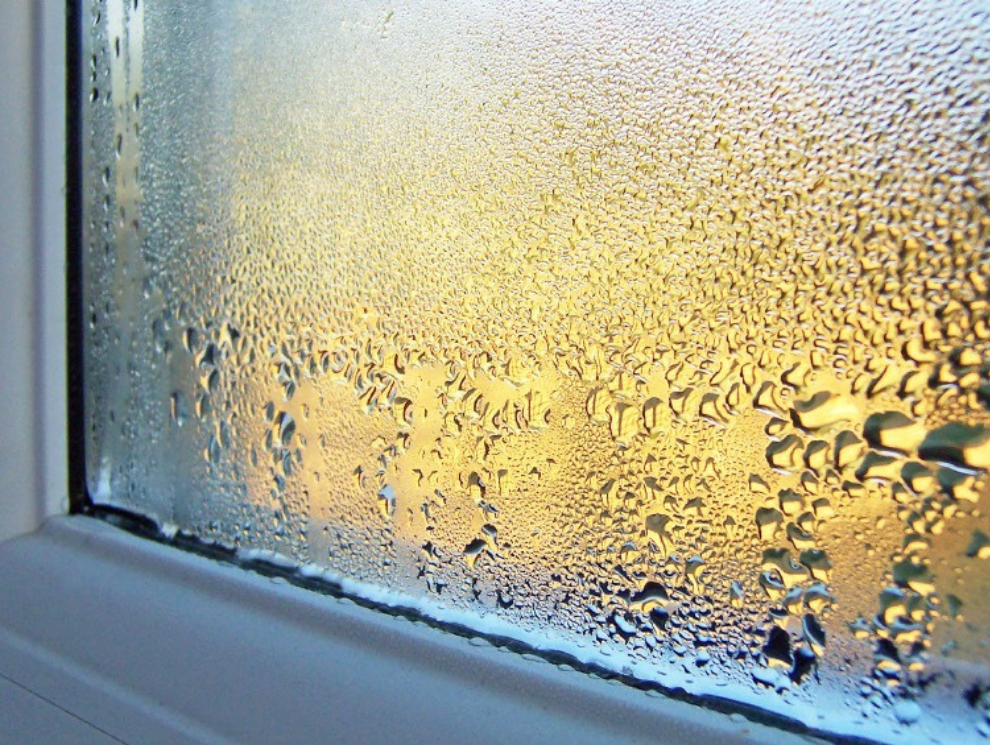
New BTO flats face a humidity problem that older flats often don't: trapped construction moisture. Fresh concrete, plaster, and paint release moisture into the air for months — sometimes over a year — after handover. Combined with Singapore's already-high ambient humidity (averaging 80%), a new BTO can run damper than a comparable resale flat during its first year.
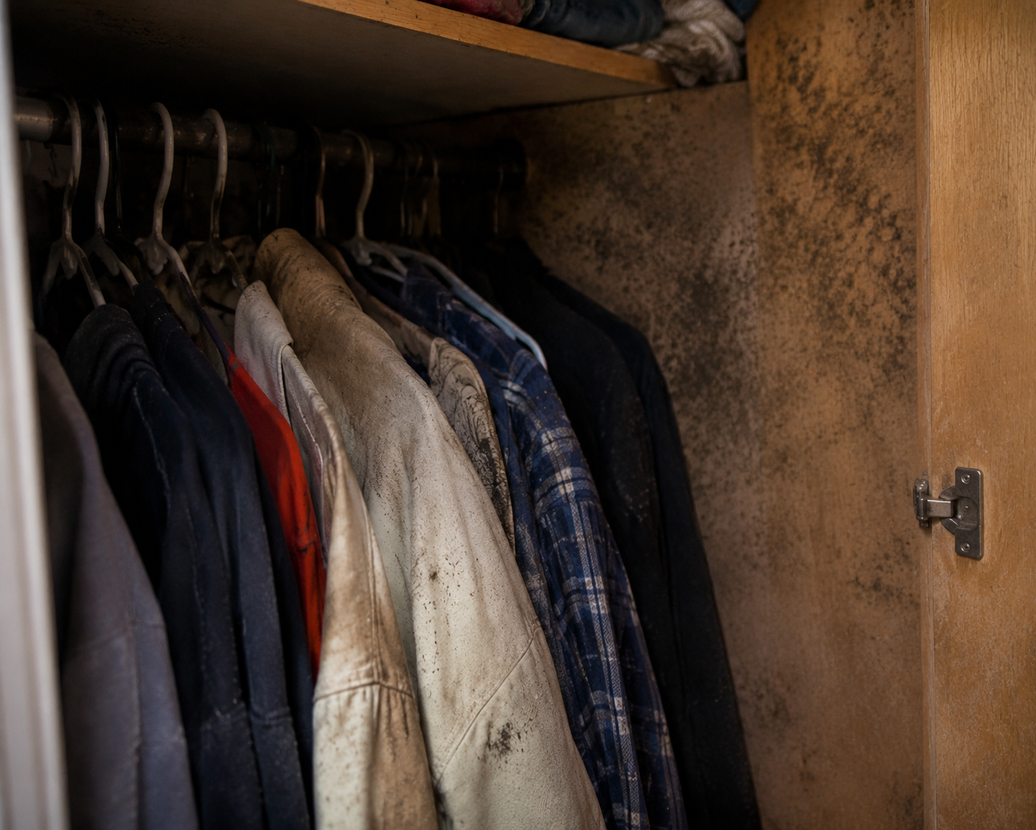
This is why so many new homeowners notice mould on shoe cabinet interiors, a musty smell in built-in wardrobes, or fogged-up camera lenses within months of moving in — even with regular cleaning. The moisture isn't coming from dirt; it's coming from the air itself.
The Four Options, Explained
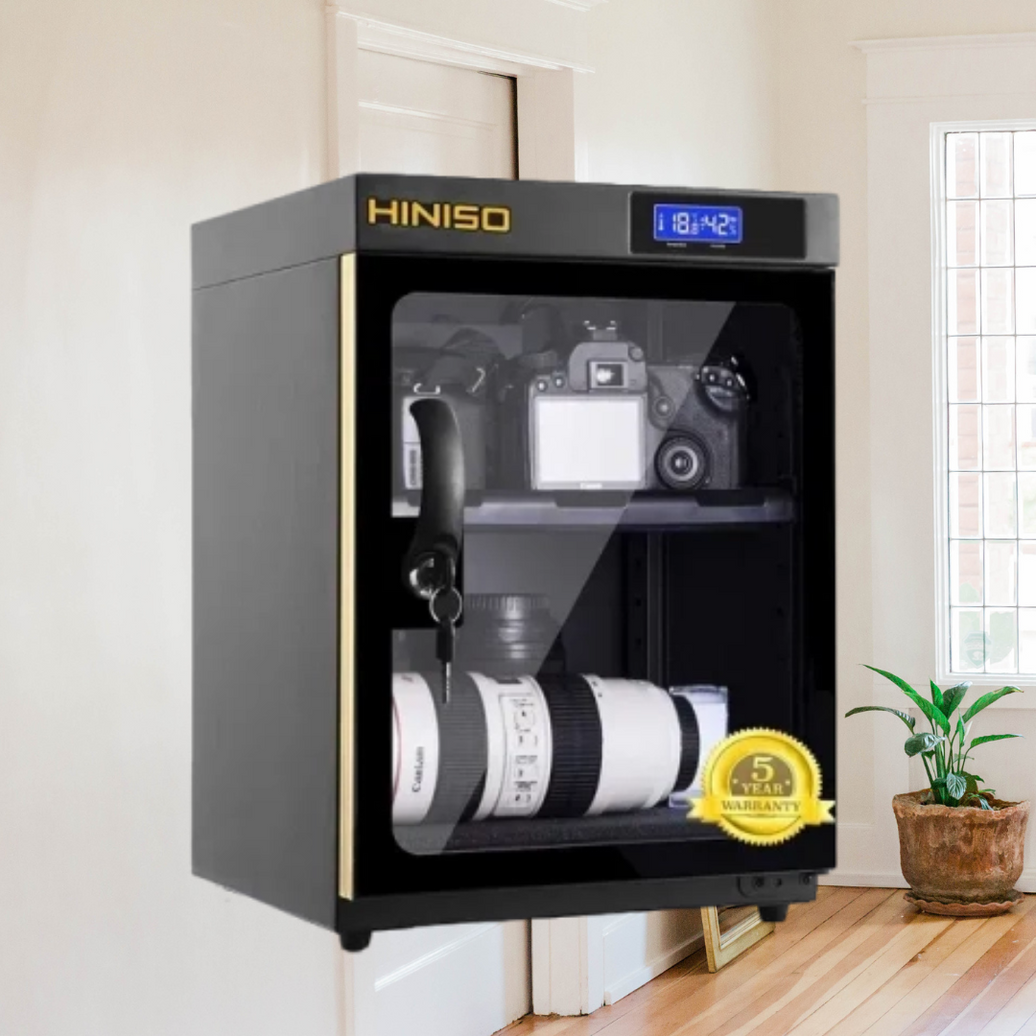
1. Dry Box (Dry Cabinet)
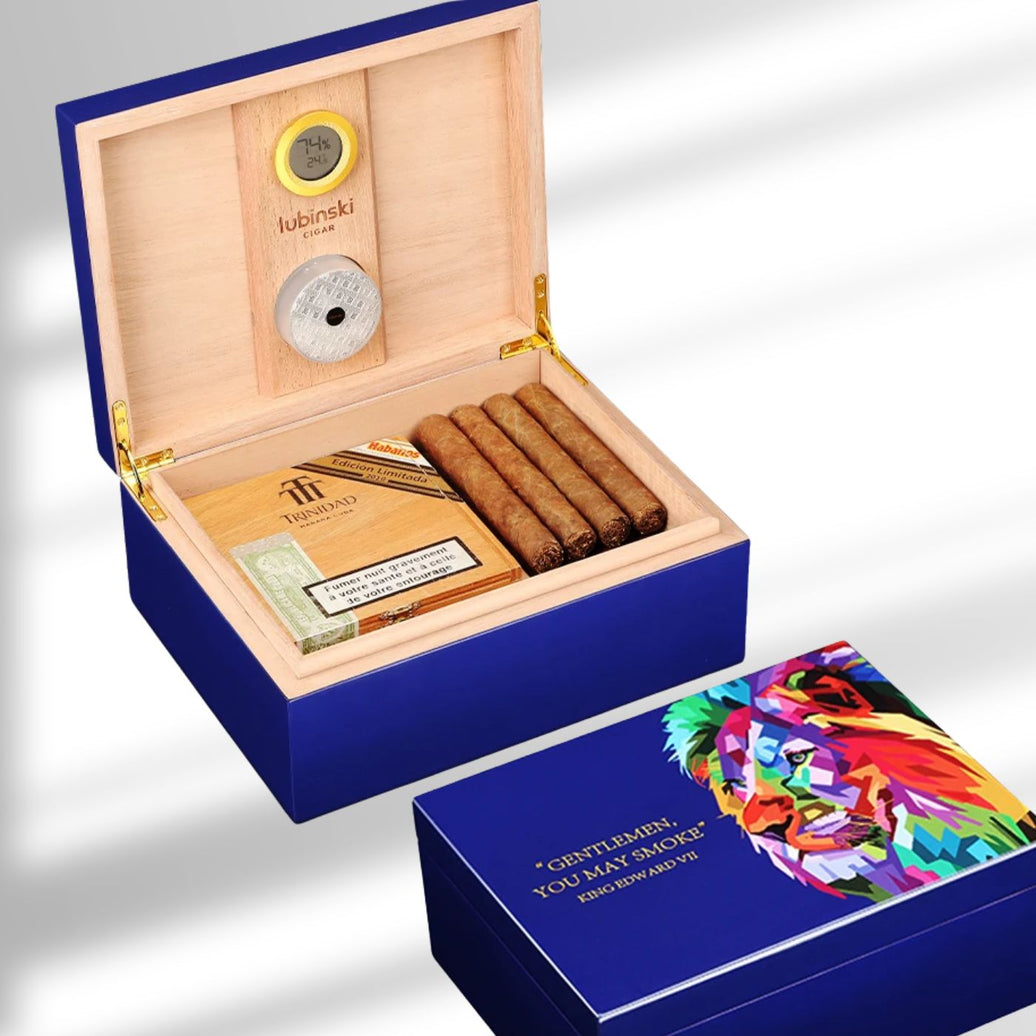
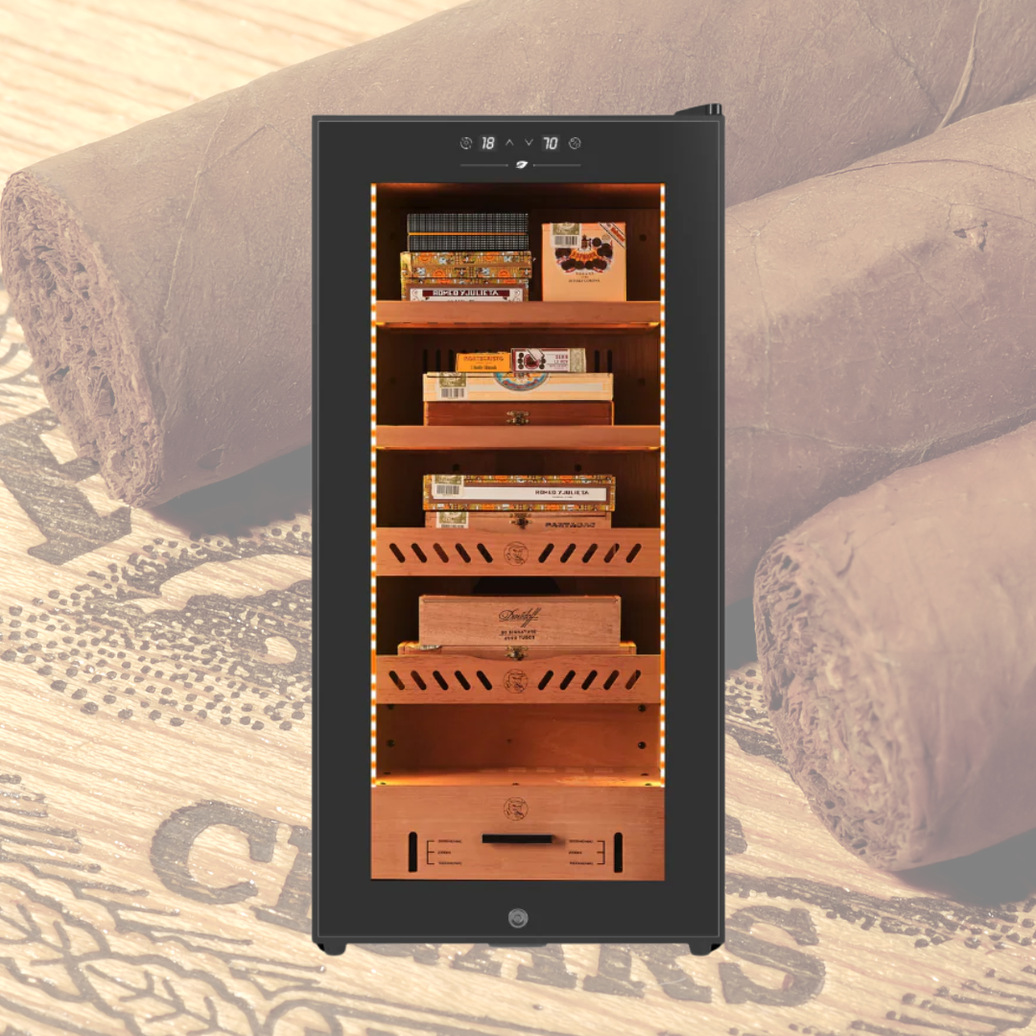
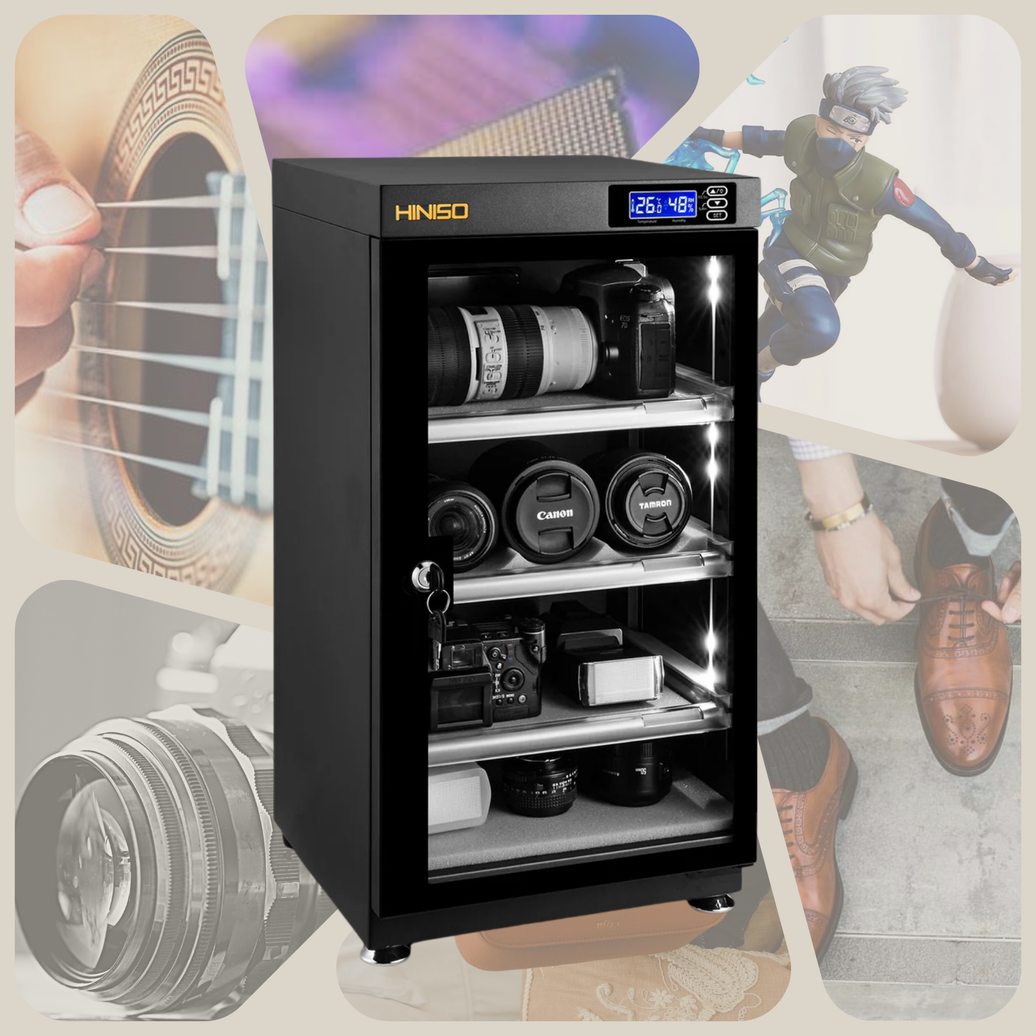
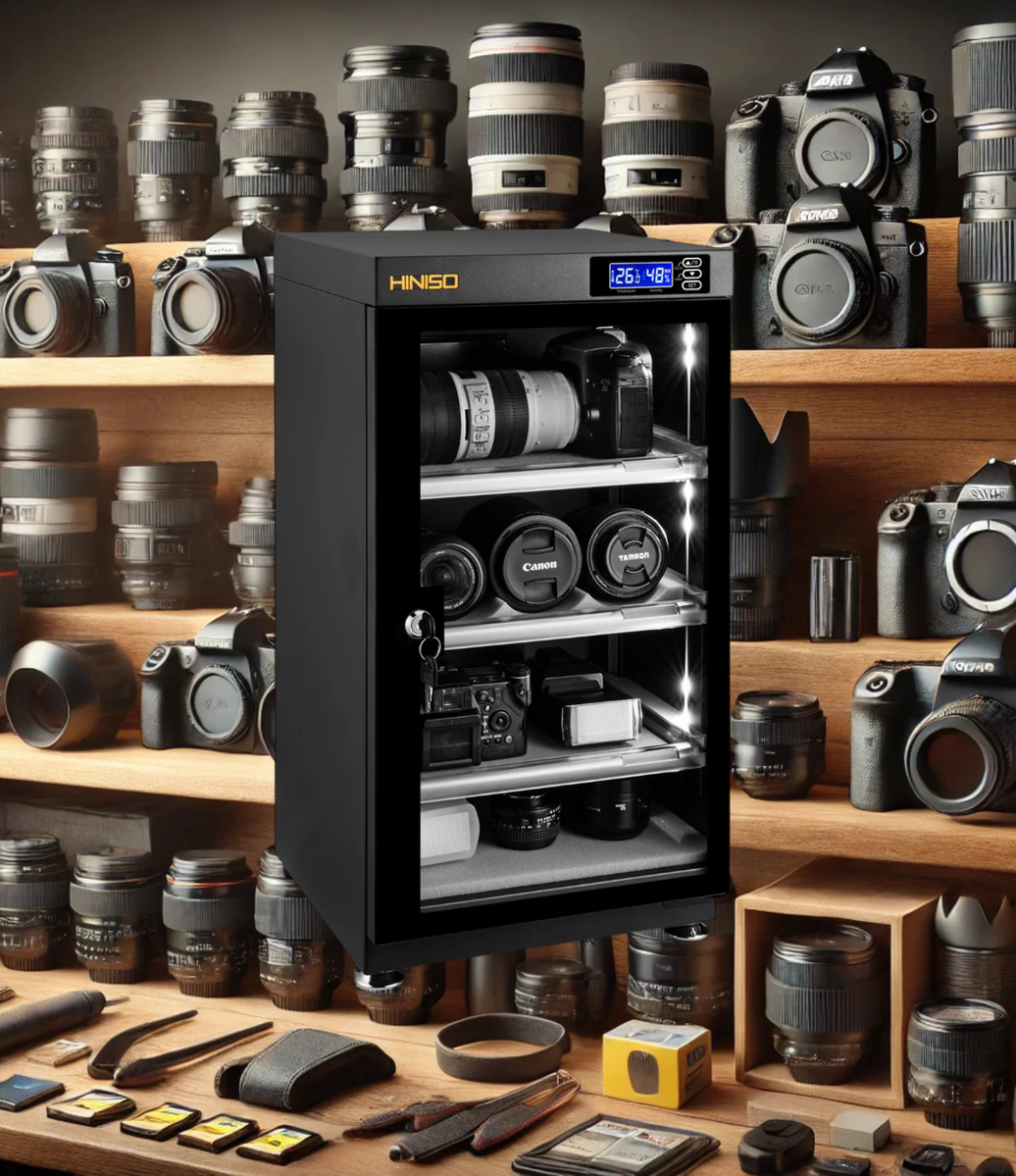
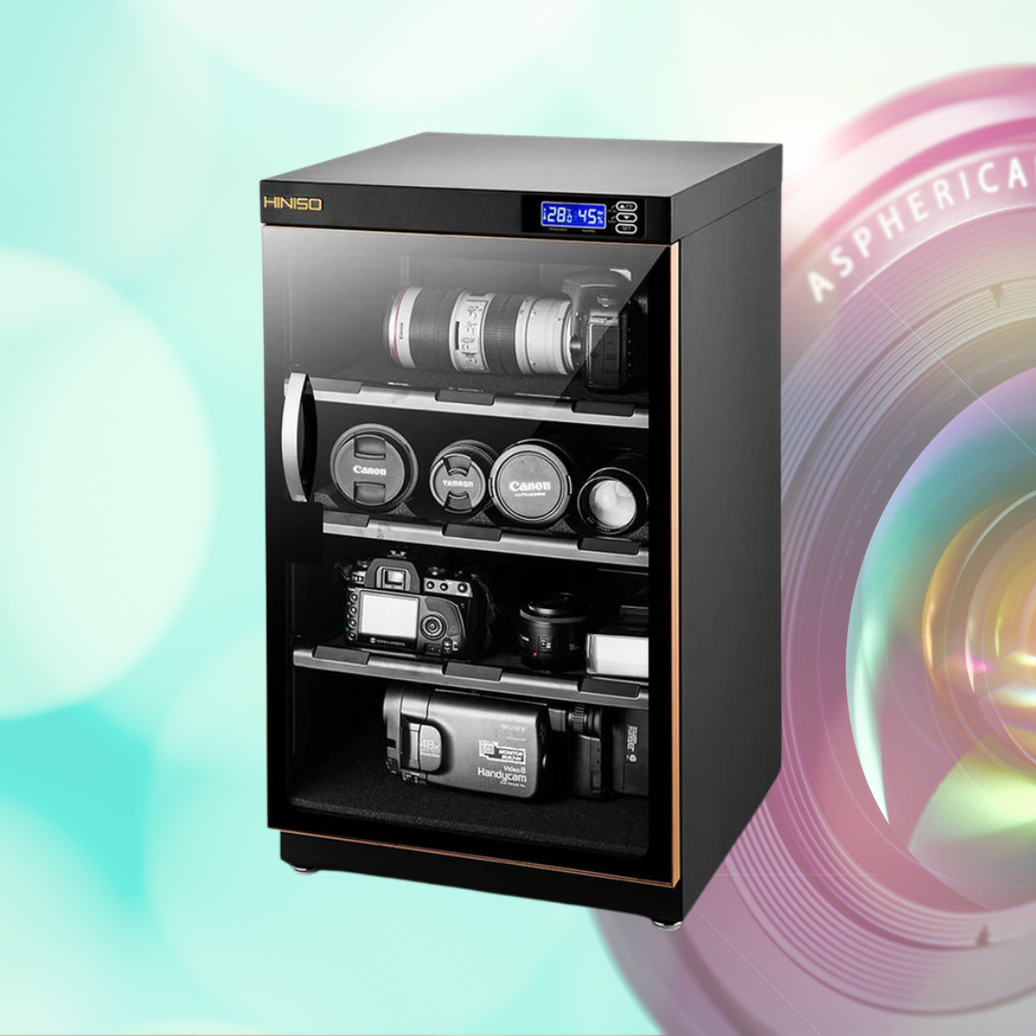
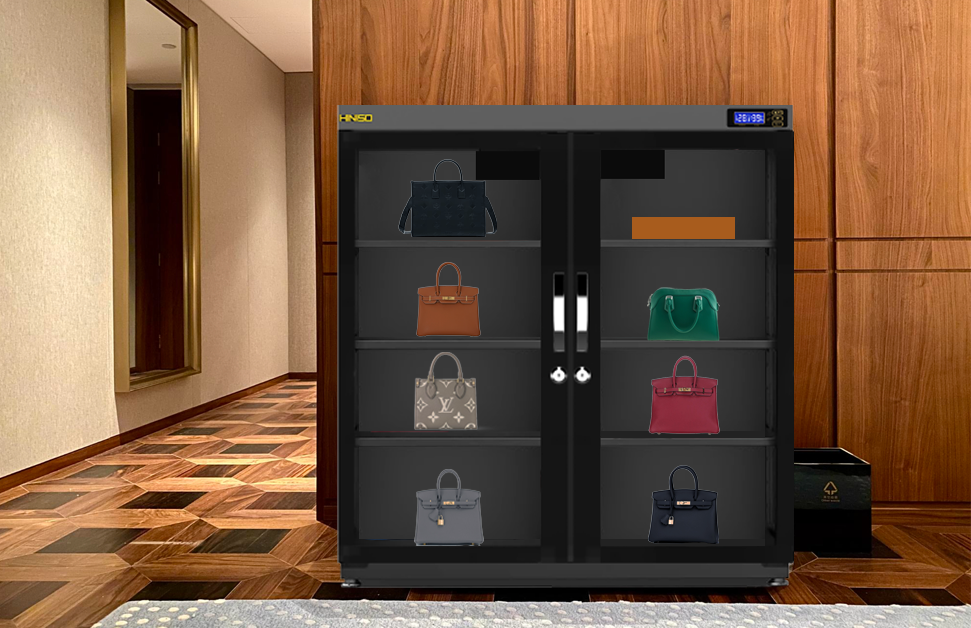
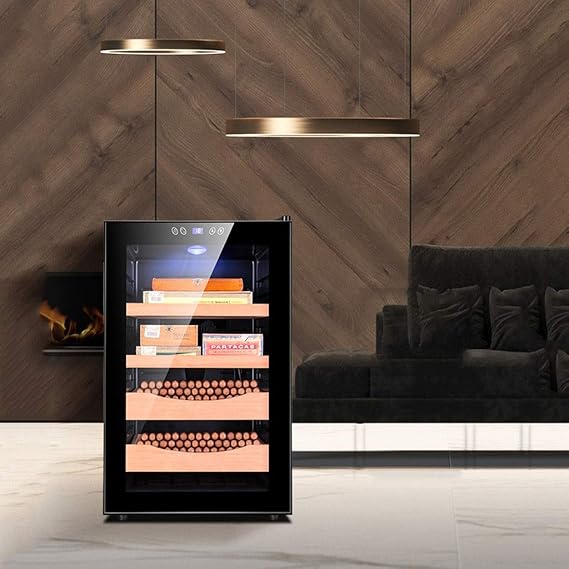
What it is: A sealed cabinet with a built-in digital dehumidifying unit that maintains a precise, low humidity level inside — typically adjustable between 40% and 60% RH.
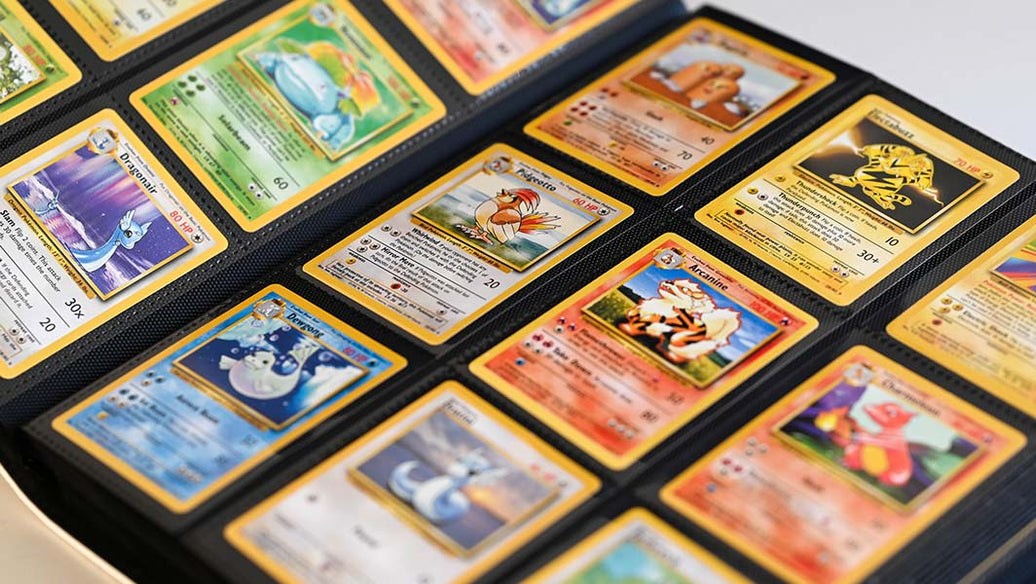
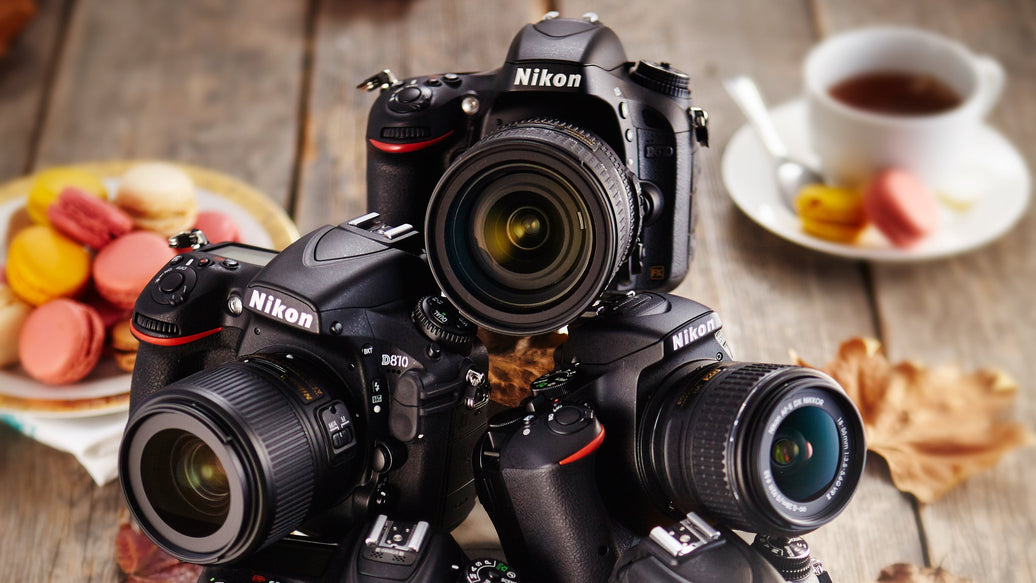
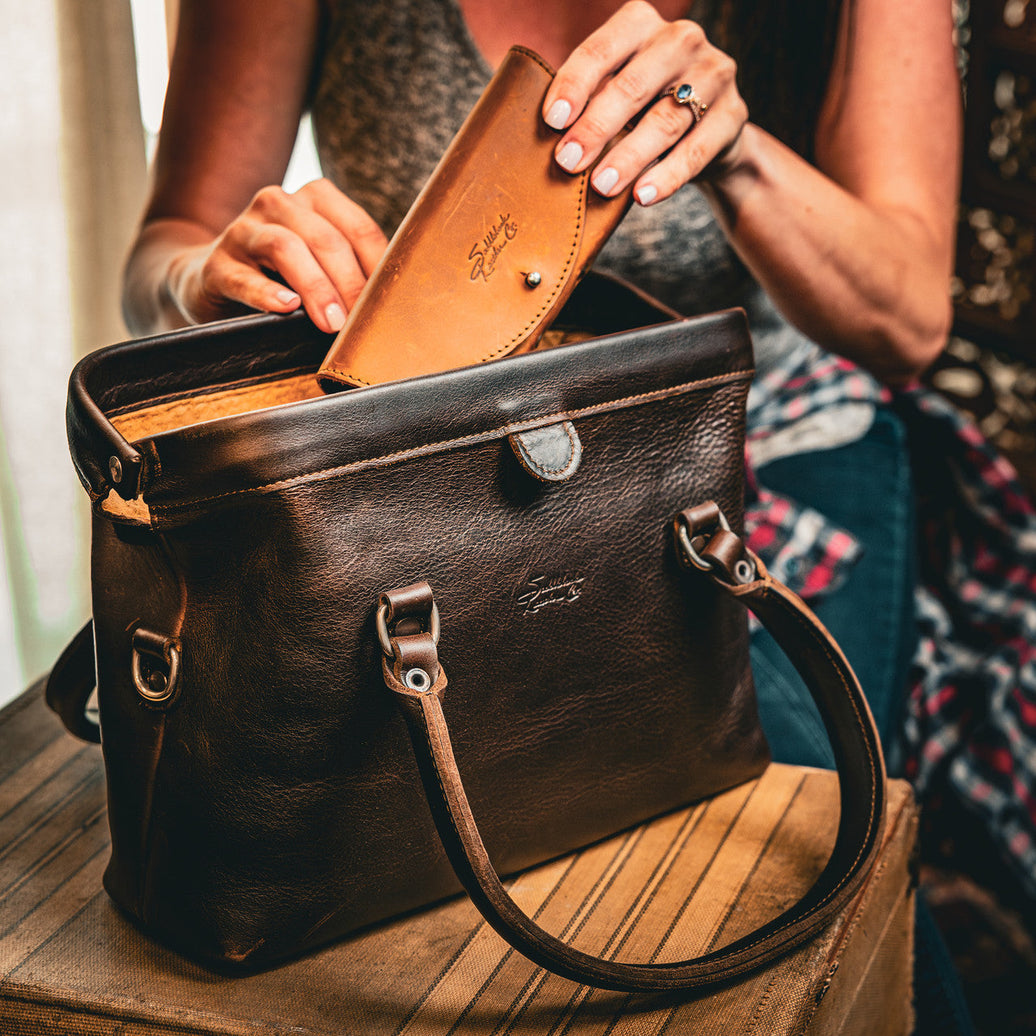
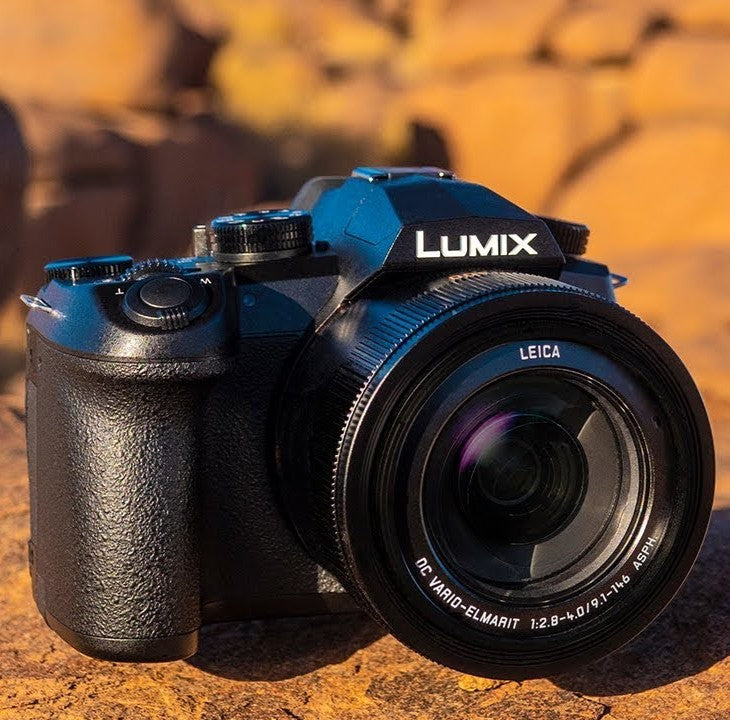
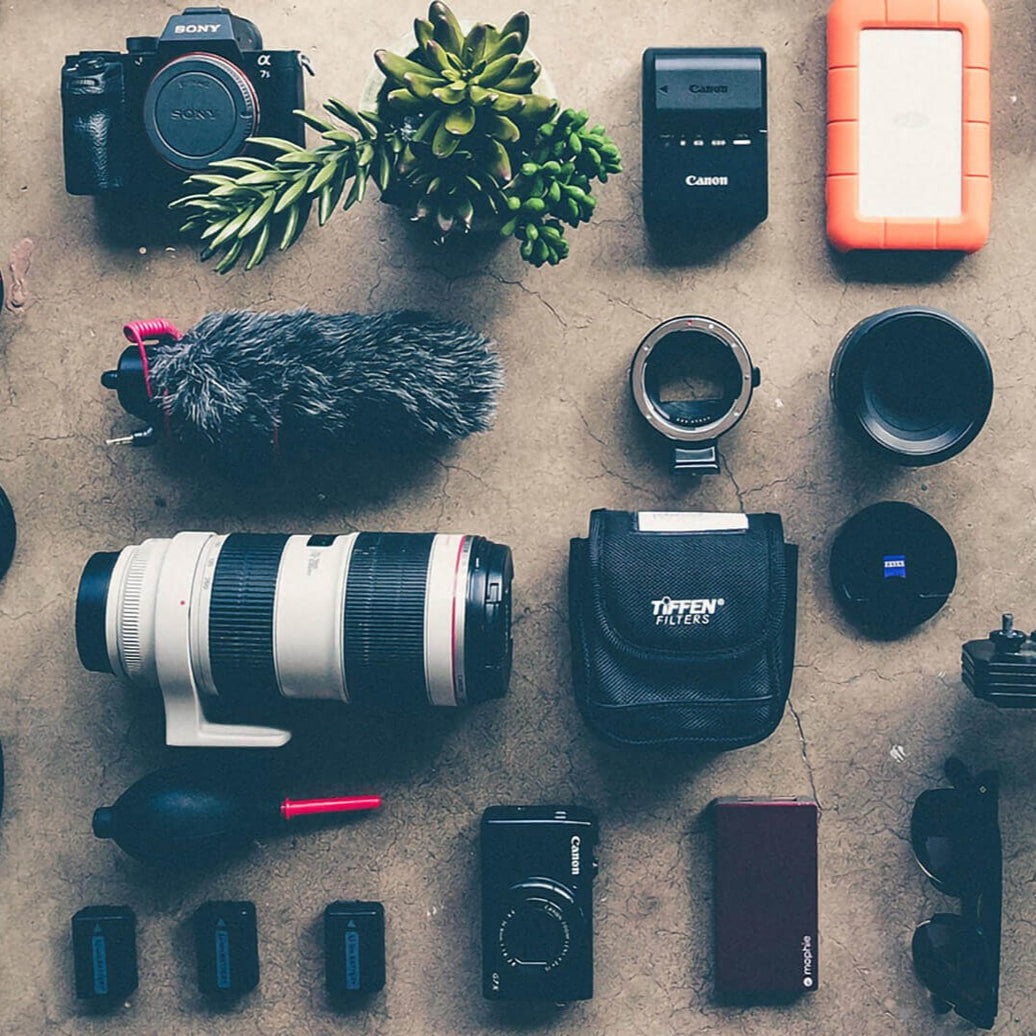
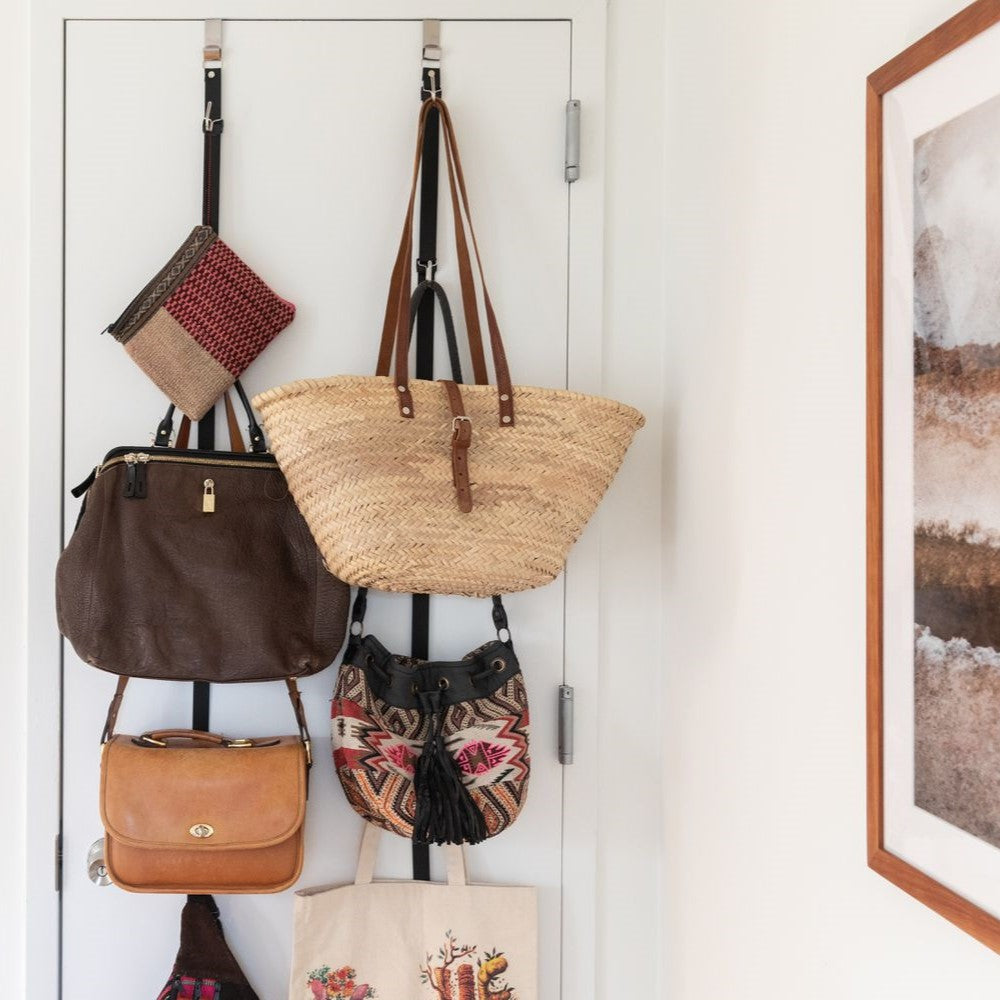
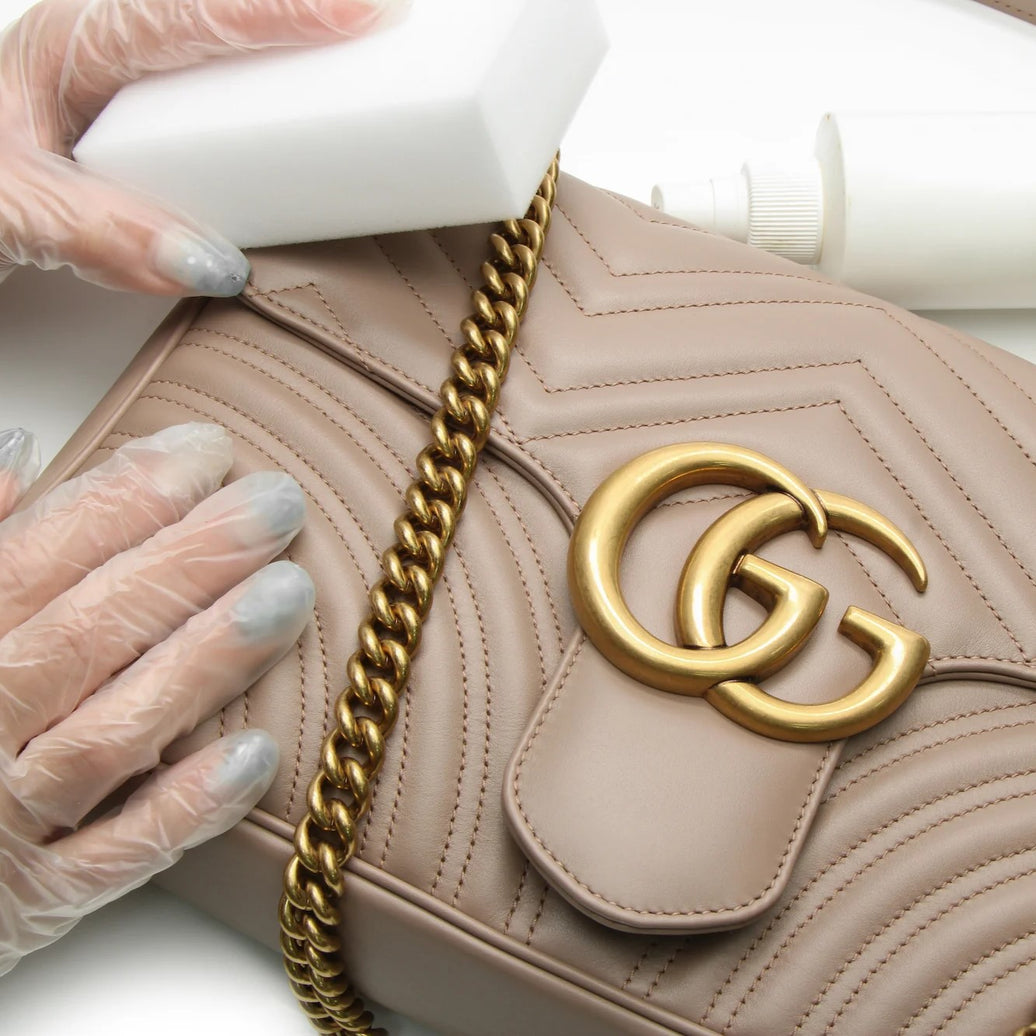
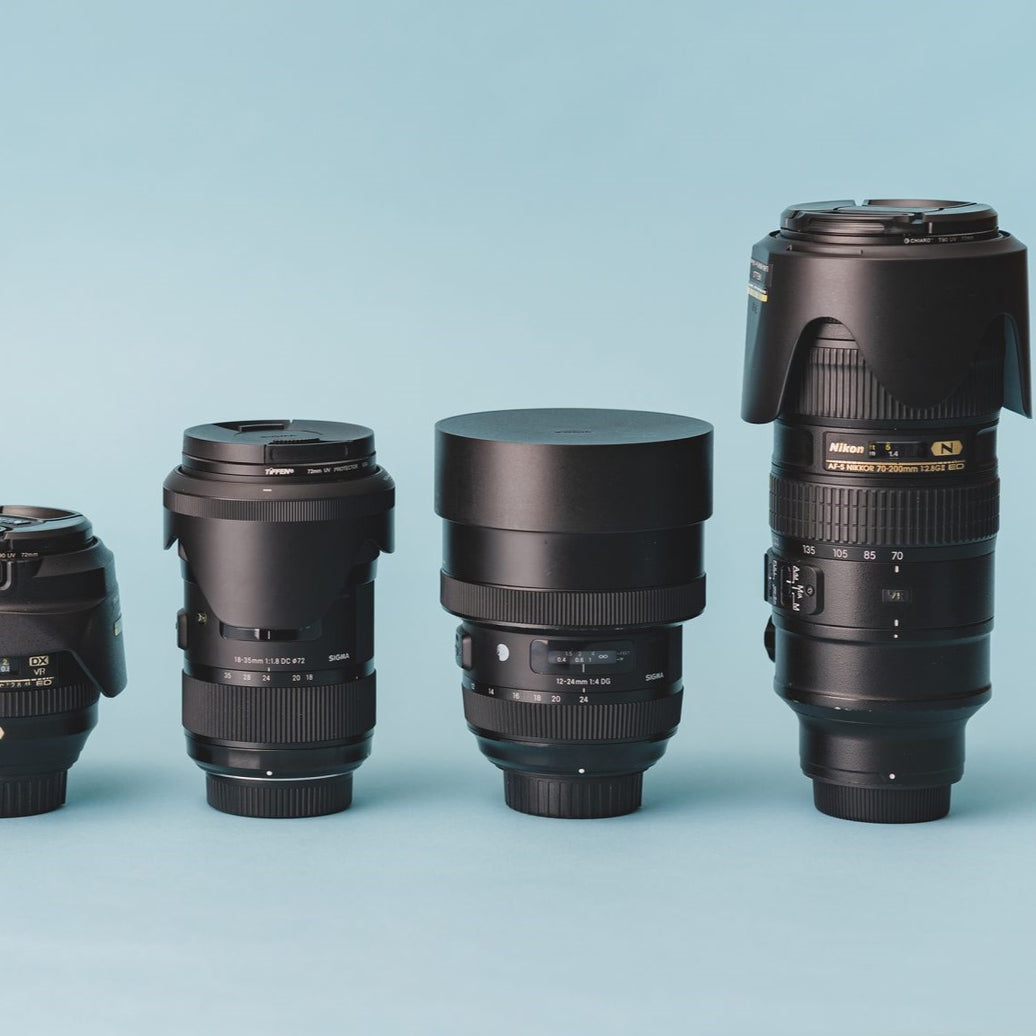
What it's for: Protecting specific high-value or moisture-sensitive items: cameras and lenses, leather bags and shoes, watches, musical instruments, important documents, currency or stamp collections, vinyl records.
How it works: Unlike passive solutions, a dry cabinet actively senses and controls internal humidity automatically, sealing out the ambient air entirely. This makes it the most precise and consistent option of the four — but only for what's inside it.
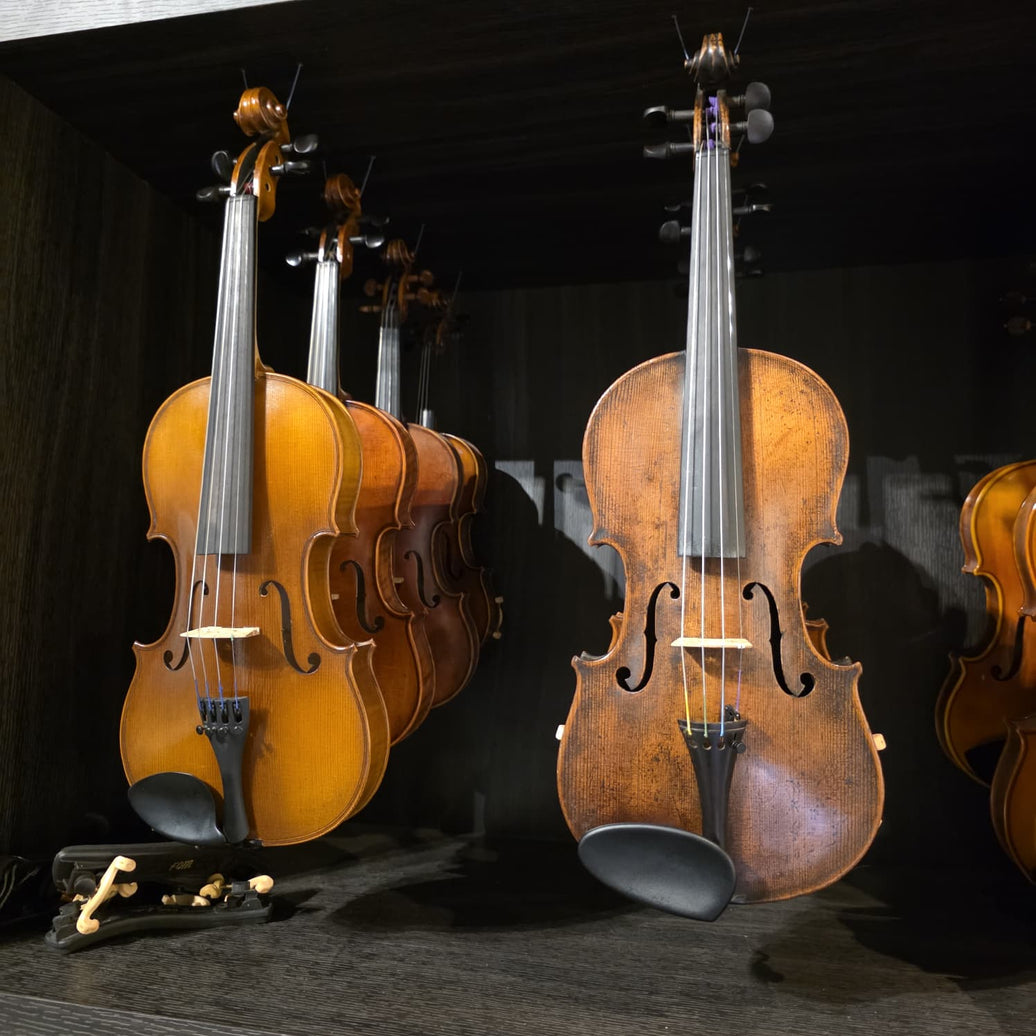
Best for: Camera and lens collections, leather bags, leather goods, electronics, papers, books, guitars and violins, watches, and basically anything under the sun in our humid climate
Limitation: A dry box only protects what's inside it. It does nothing for the rest of your wardrobe, bedroom, or living space.
2. Dry Rods (Dehumidifier Rods)
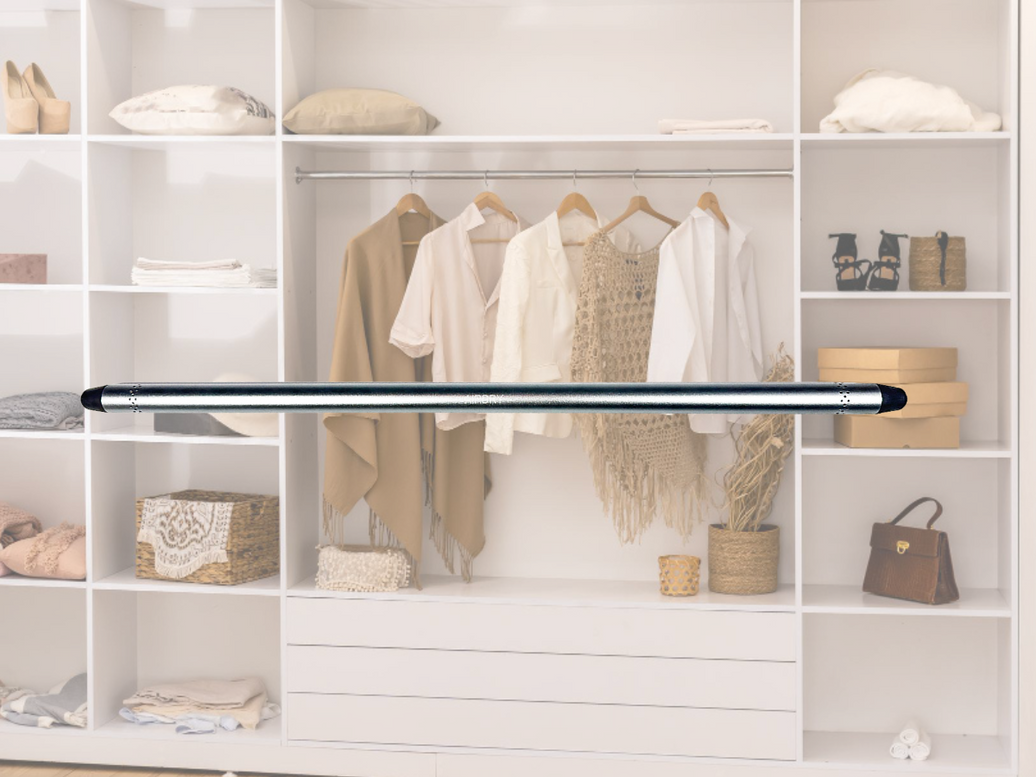
What it is: A slim, heating-element rod — usually 30–60cm long — placed inside a closed wardrobe, cabinet, or shoe cupboard. It works by gently warming the air inside the enclosed space, which lowers relative humidity without any moving parts, water tank, or digital display.
What it's for: Low-cost, passive humidity reduction inside small enclosed spaces — wardrobes, shoe cabinets, storage cupboards, under-sink cabinets.
How it works: Dry rods don't extract water like a dehumidifier; they raise the temperature slightly within a sealed space, which reduces the relative humidity percentage. They're inexpensive, draw very little power, and need almost no maintenance — just plug and leave running continuously.
Best for: Shoe cabinets, linen closets, small wardrobes, and any enclosed storage space where mould and musty smells are a recurring problem, but where buying a full dry cabinet isn't justified by the value of what's stored.
Limitation: Dry rods only work in enclosed, relatively small spaces. They're far less effective — almost ineffective — in open rooms or large walk-in wardrobes with poor sealing, since there's too much air volume and too much air exchange with the room for gentle warming to meaningfully lower humidity. Humidity is not controllable at an exact point but in a range.
3. Closet / Wardrobe Dehumidifiers
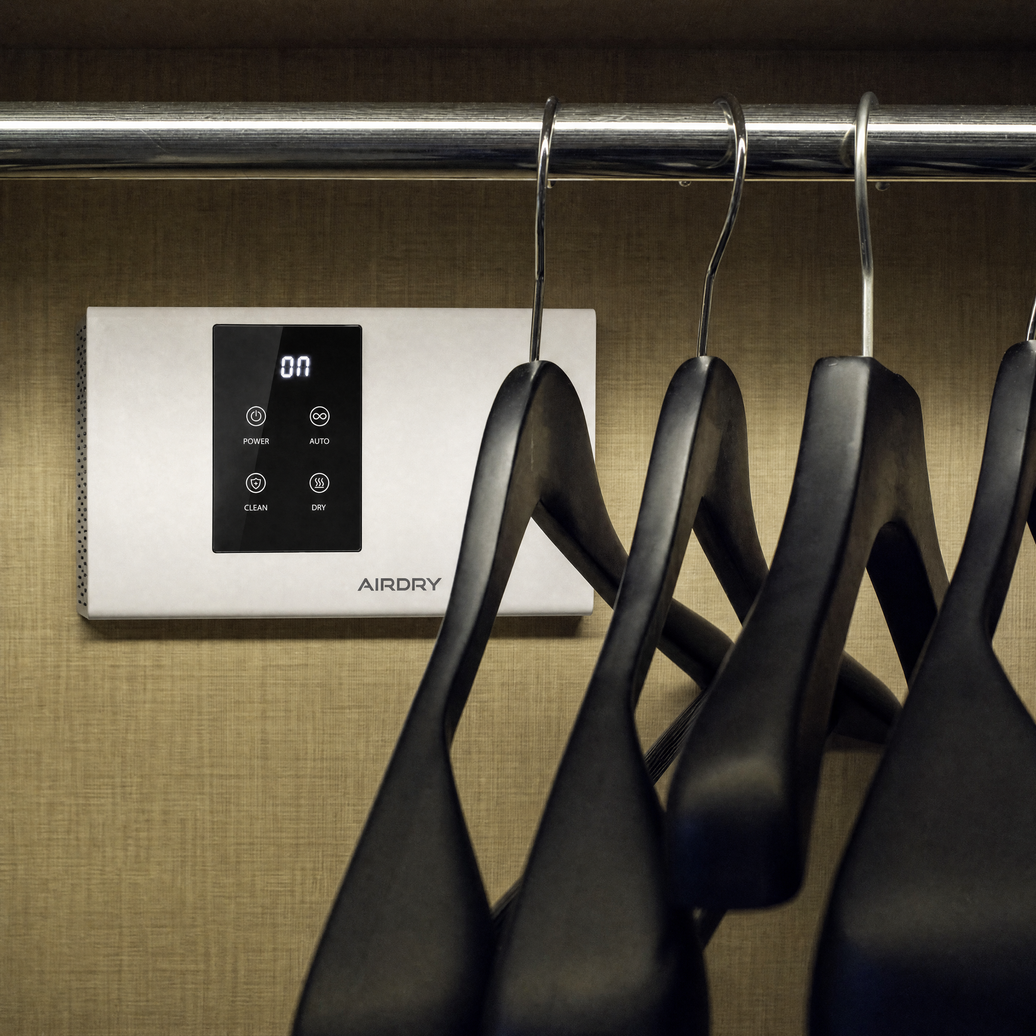
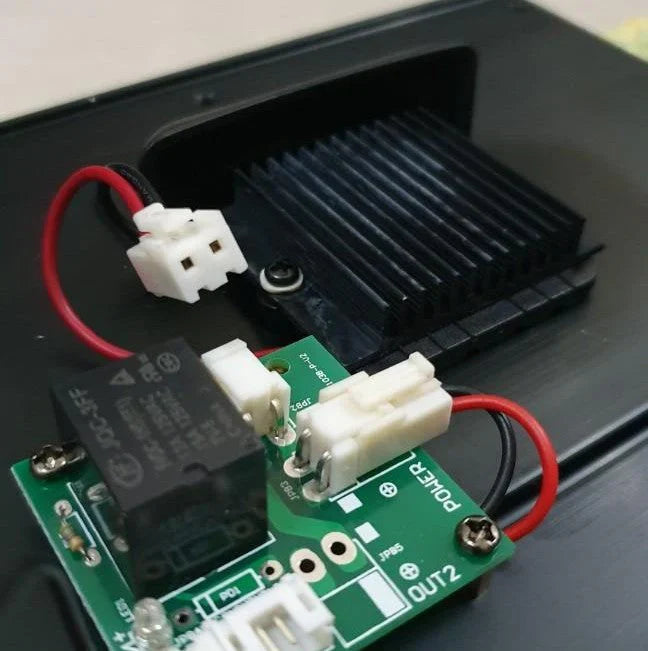
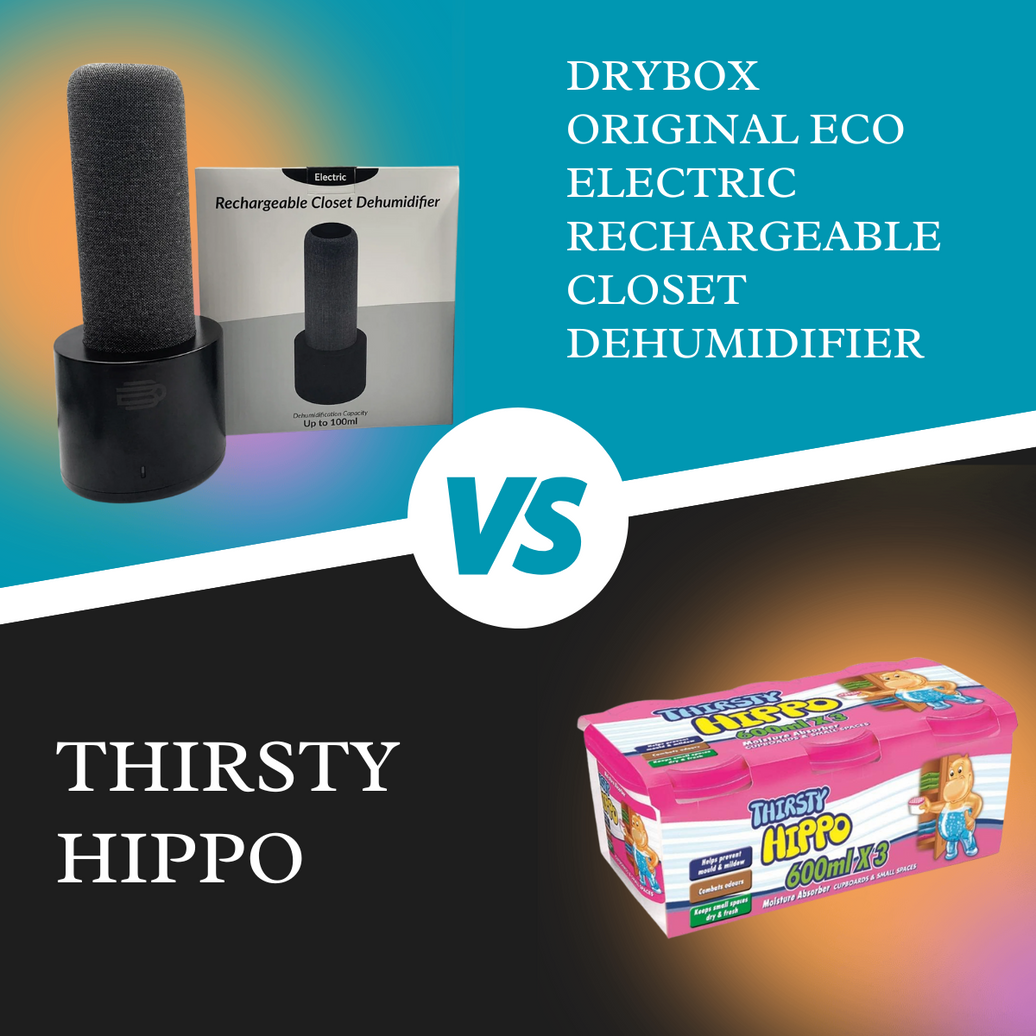
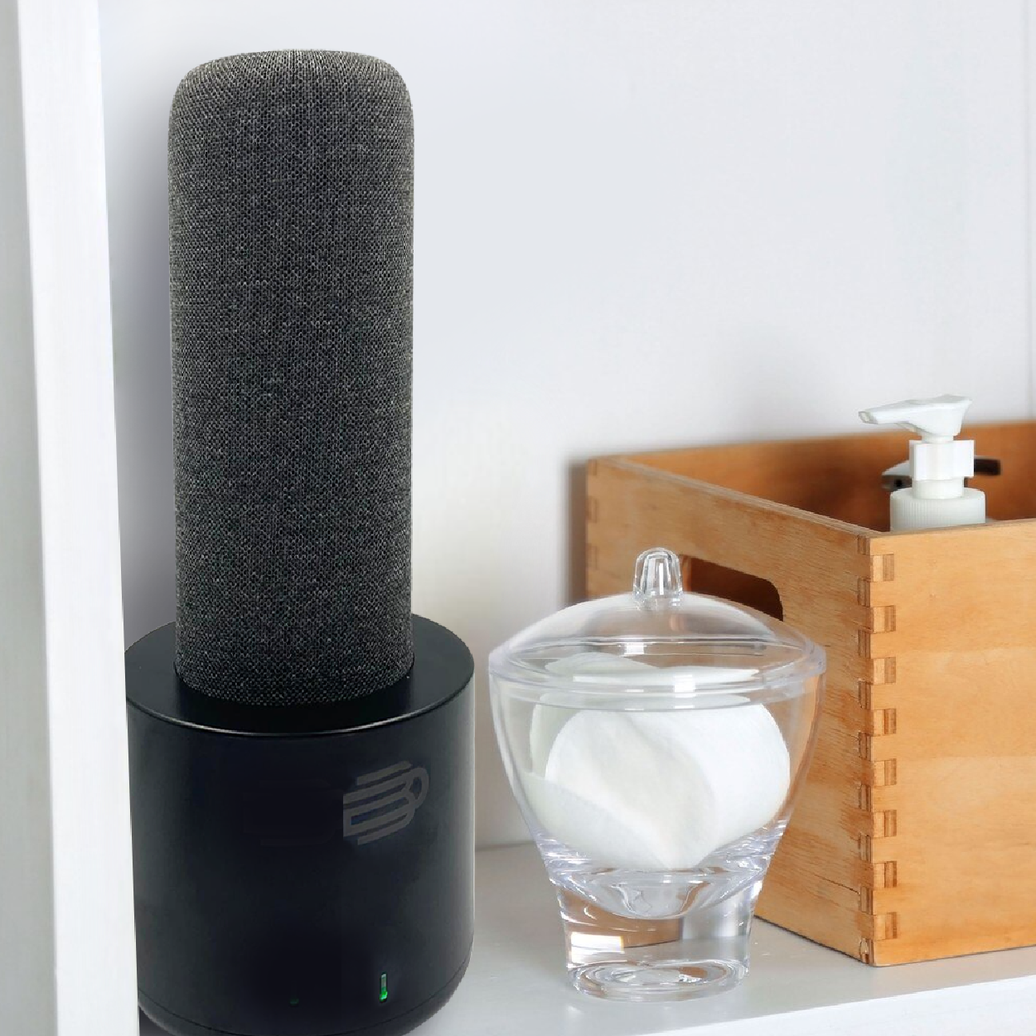
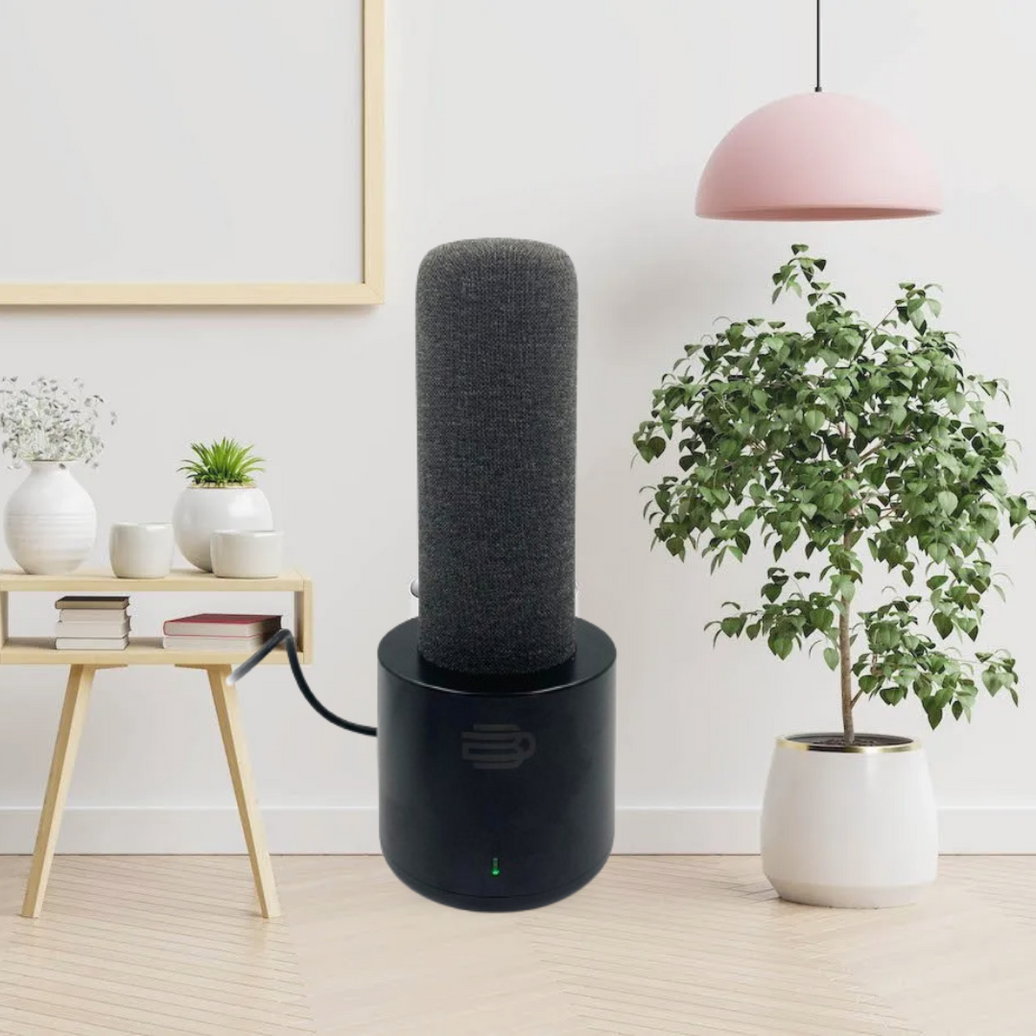
What it is: A middle-ground category — compact dehumidifying units (sometimes called mini or closet dehumidifiers) designed to sit inside a wardrobe or closet and actively extract moisture, rather than just warming the air. Some are rechargeable and use moisture-absorbing crystals or small compressor/Peltier-based units.
What it's for: Medium-sized enclosed spaces — full wardrobes, display shelvings — where a dry rod's passive warming isn't quite enough, but a full dry cabinet would be overkill.
How it works: These units actively pull moisture out of the air and collect it (or absorb it via desiccant), rather than simply discouraging humidity through warmth. Compact size designed for wardrobes.
Best for: Display shelvings, closets, wardrobes— and any closed space larger than a single shoe cabinet but smaller than a bedroom.
Limitation: Most closet dehumidifiers have small water collection capacity and need frequent emptying, or rely on desiccant packs/crystals that need periodic recharging or replacement. They're not designed to dehumidify open rooms.
4. Room Dehumidifiers
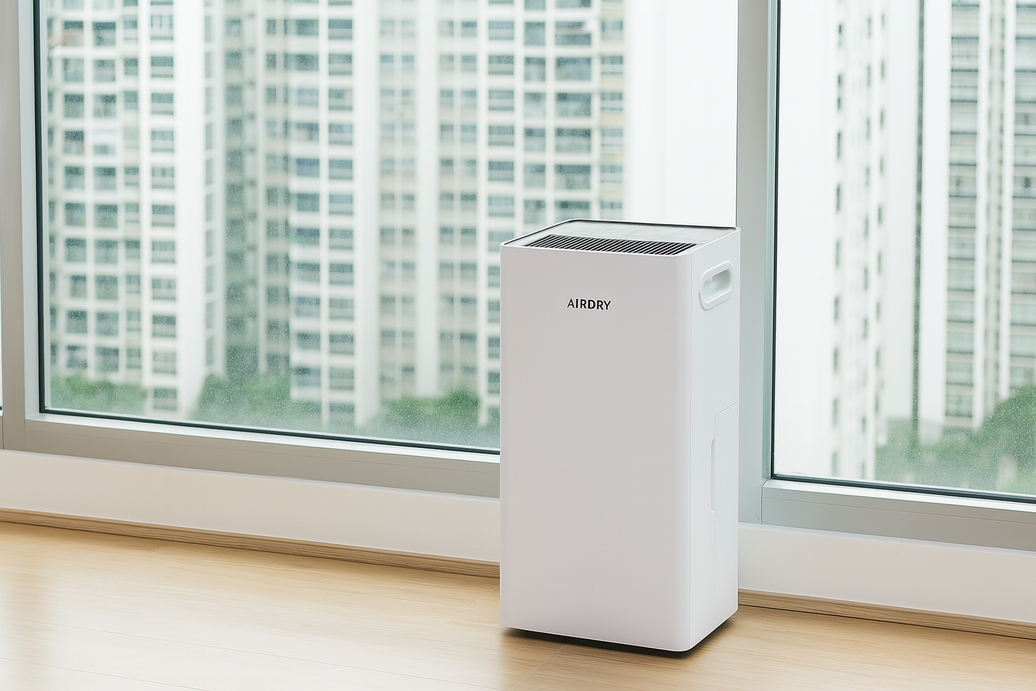
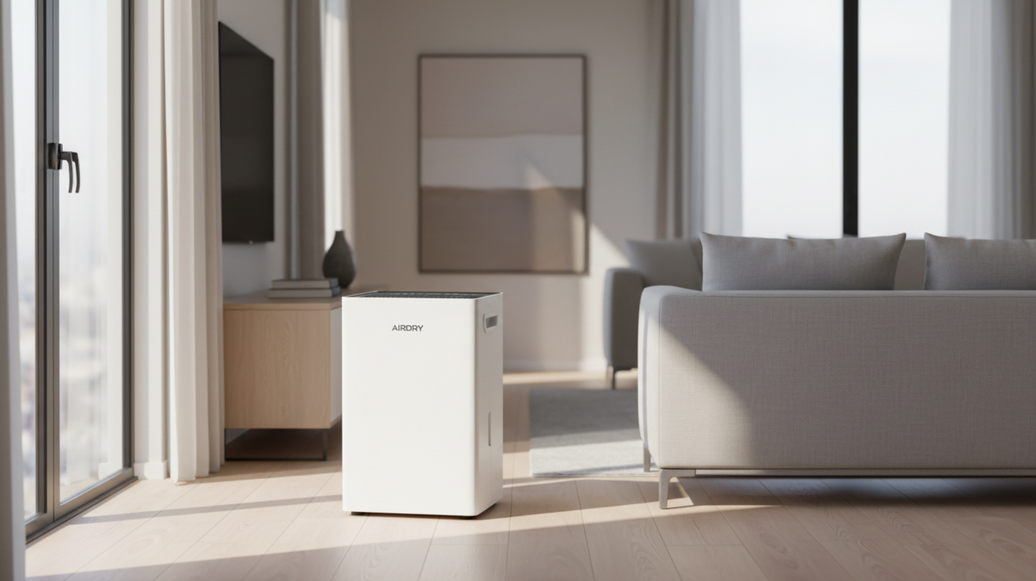
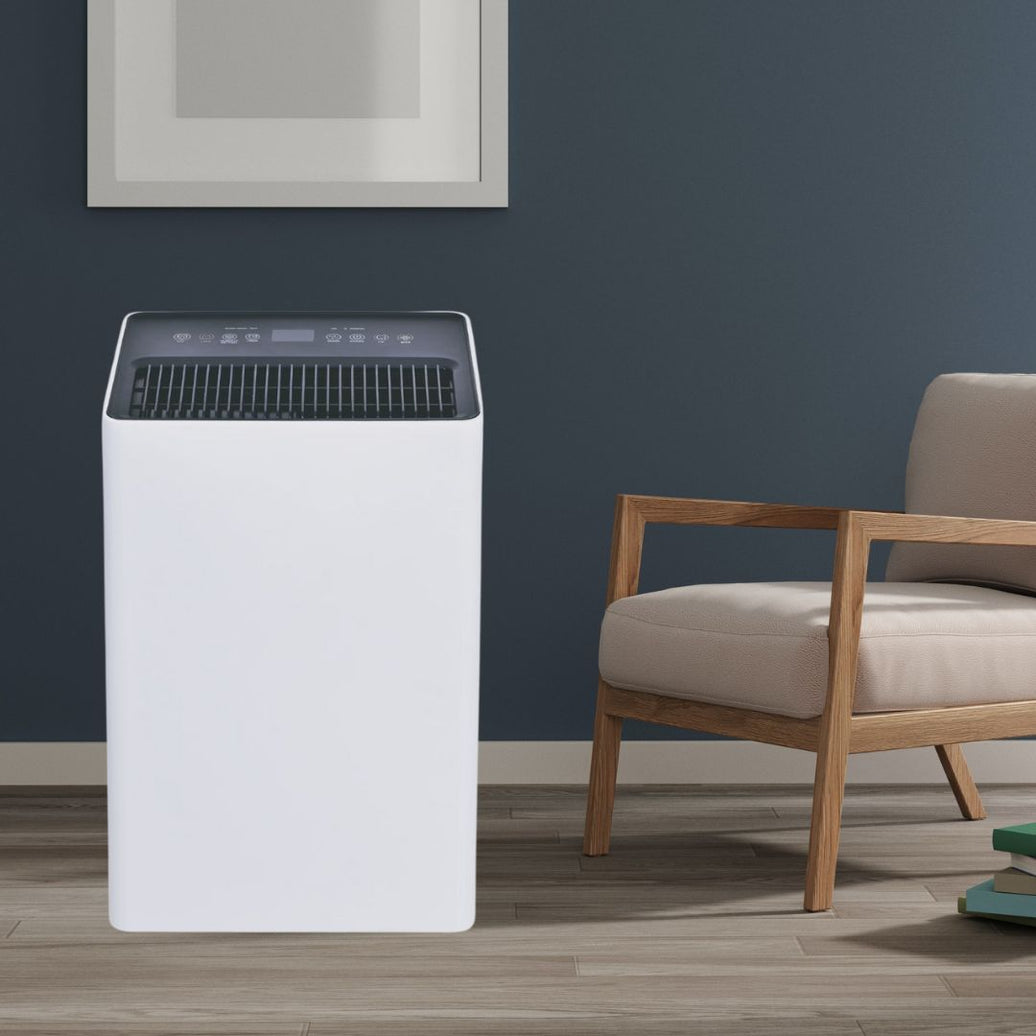
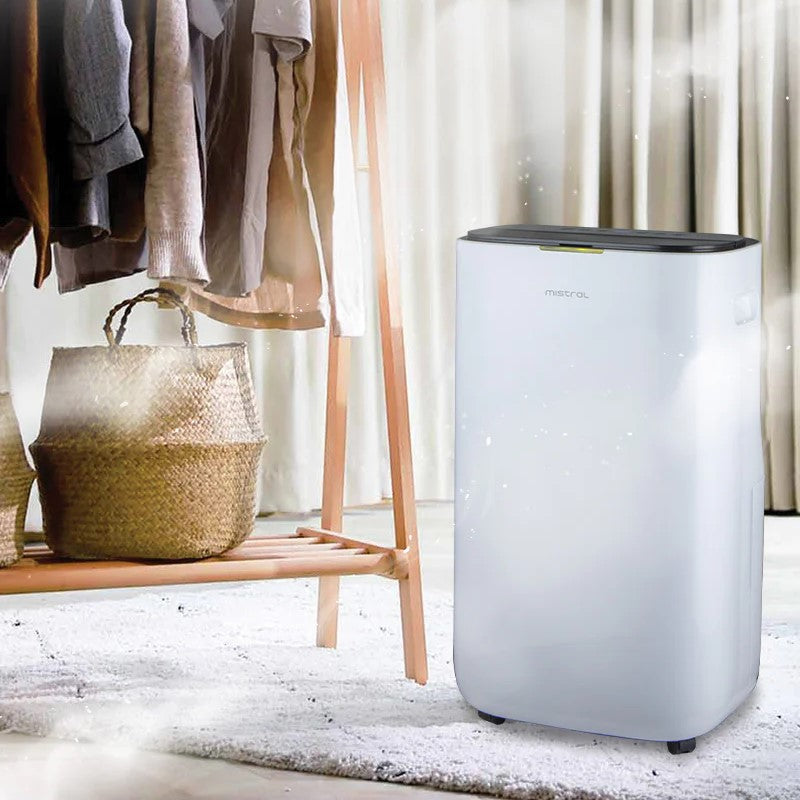
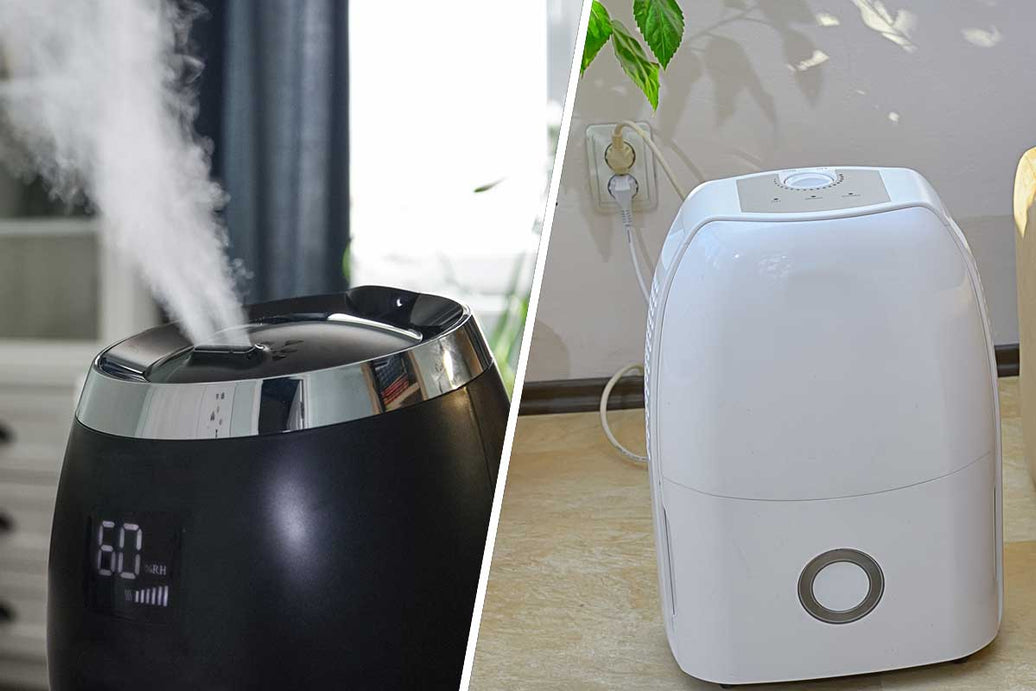
What it is: A standalone, mains-powered appliance — usually with a compressor-based system — designed to actively extract moisture from an entire room or open living space. Most residential models extract 20–30 litres of moisture per day and cover anywhere from 400 to over 1,200 square feet.
What it's for: Whole-room humidity control — bedrooms, living rooms, entire flats. This is the appliance to reach for if your concern is general comfort, mould prevention on walls and ceilings, musty smells throughout a space, or drying laundry indoors faster.
How it works: A fan draws room air across a refrigerated coil, condensing moisture out of the air into a collection tank (or via continuous drainage hose), then releases drier air back into the room. Most modern units include additional functions — air purification, ionising, and a laundry-drying mode — making them genuinely multi-purpose appliances for BTO living.
Best for: New BTO flats during the construction "drying out" period, bedrooms prone to mould on walls, living rooms used for indoor laundry drying, and households generally wanting more comfortable, less sticky air.
Limitation: Less precise for protecting specific high-value items compared to a dedicated dry cabinet — a room dehumidifier maintains comfortable room humidity (usually 50–60%), not the tighter 30–45% range that camera gear or leather goods benefit from.
Side-by-Side Comparison
| Dry Box | Dry Rod | Closet Dehumidifier | Room Dehumidifier | |
|---|---|---|---|---|
| Coverage | Sealed cabinet only | Small enclosed space | Wardrobe / store room | Entire room |
| Method | Active digital control | Passive heating | Active extraction (small scale) | Active extraction (large scale) |
| Precision | Very high (set exact %) | Range | Range | Moderate |
| Price Range | $80–$1,000+ | $45–$80 | $39-$200+ | $200–$600+ |
| Maintenance | Minimal (sealed unit) | None | Empty tank / replace desiccant | Empty tank or use drain hose |
| Best for | Cameras, leather, electronics, instruments | Shoe cabinets, small closets | Closet, Wardrobes | Bedrooms, living rooms, whole flat |
| Power Use | Low-moderate | Very low | Low | Moderate |
What Your BTO Actually Needs: A Practical Guide
Most BTO homeowners need all four — combined to form the best humidity solutions for a better home.
For Items:
Get a dry box. No other option on this list protects these items adequately. Ambient room humidity — even with a room dehumidifier running — still fluctuates more than these items can tolerate over years of storage. A dedicated dry cabinet is the only solution built for long-term, precise protection.
For shoe cabinet or small wardrobe,display shelvings:
Start with a dry rod. It's the cheapest, lowest-effort fix for small enclosed spaces, and for shoe cabinets specifically, it's usually all you need.
For normal or larger cupboards, display shelvings:
Get a closet dehumidifier. This is the size category most homeowners underestimate — a walk-in wardrobe is too large for a dry rod to meaningfully help, but doesn't need a full room unit either.
For entire living space and better air quality:
Get a room dehumidifier. This is almost always the first purchase worth making in a new BTO, precisely because new-build construction moisture affects the entire flat, not just one cabinet. It also does double duty for indoor laundry drying — a genuine win in a flat without much outdoor drying space.
Most well-equipped BTO homes end up with a combination: a room dehumidifier for general living comfort, a dry box for cameras or leather goods, and dry rods tucked into shoe cabinets. This layered approach — broad coverage plus targeted protection for valuables — is far more cost-effective than trying to solve every humidity problem with a single oversized appliance.
Where to Find the Right Solution
Dry Box SG (drybox.com.sg) carries dedicated solutions across this exact range — from room dehumidifiers sized for HDB bedrooms and living rooms, to dry boxes for cameras, leather goods, and collectibles, to dry cabinet options purpose-built for guitars and violins. Most dry boxes comes with Dry Box SG's on-site 6-year warranty, fast shipping, local after sales support and SG safety mark-certified adapters.
Looking for more BTO home guides? Check out our comparisons on room dehumidifiers and how to store sensitive valuables like old currency and collectibles.